φGOLDEN RATIOφ = 1.618 — the structure beneath everything

Between

the Lines

[ a Student Publication ]

Vol. I  ·  April 2026

Sir John Lawes School

Politics, economics, and sociology — into the structural forces that actually shape the world.

Vol. I — Built to Fight, Not to Last

Scroll
BtL
Economics·Vol. I·8 min read

What if the Economy

is the Weapon?

In This Issue

Part I — The Military Problem

01The Hidden Constraint

Part II — The Economic War

03The New Battlefield
AH

Andrew He

Sixth Form · Sir John Lawes School · April 2026

Introduction

The most decisive battles of our time are not being fought on any battlefield. They are being fought in supply chains, trade agreements, and balance sheets.

This blog makes one central argument: that the most consequential conflicts of the 21st century are no longer decided by firepower alone — they are decided by economic endurance. Who can sustain a supply chain under pressure. Who controls the critical raw materials. Who can coerce an adversary without ever firing a shot.

We trace this across five chapters — beginning with the ammunition shortages that exposed the structural limits of modern military production, through the rise of drone warfare as an economic workaround, into the US-China tariff war and what it reveals about economic coercion as a geopolitical weapon. We end with the countries that had no say in any of it: the collateral of a conflict they never chose to enter.

01

01The Hidden Constraint

The Hidden Constraint

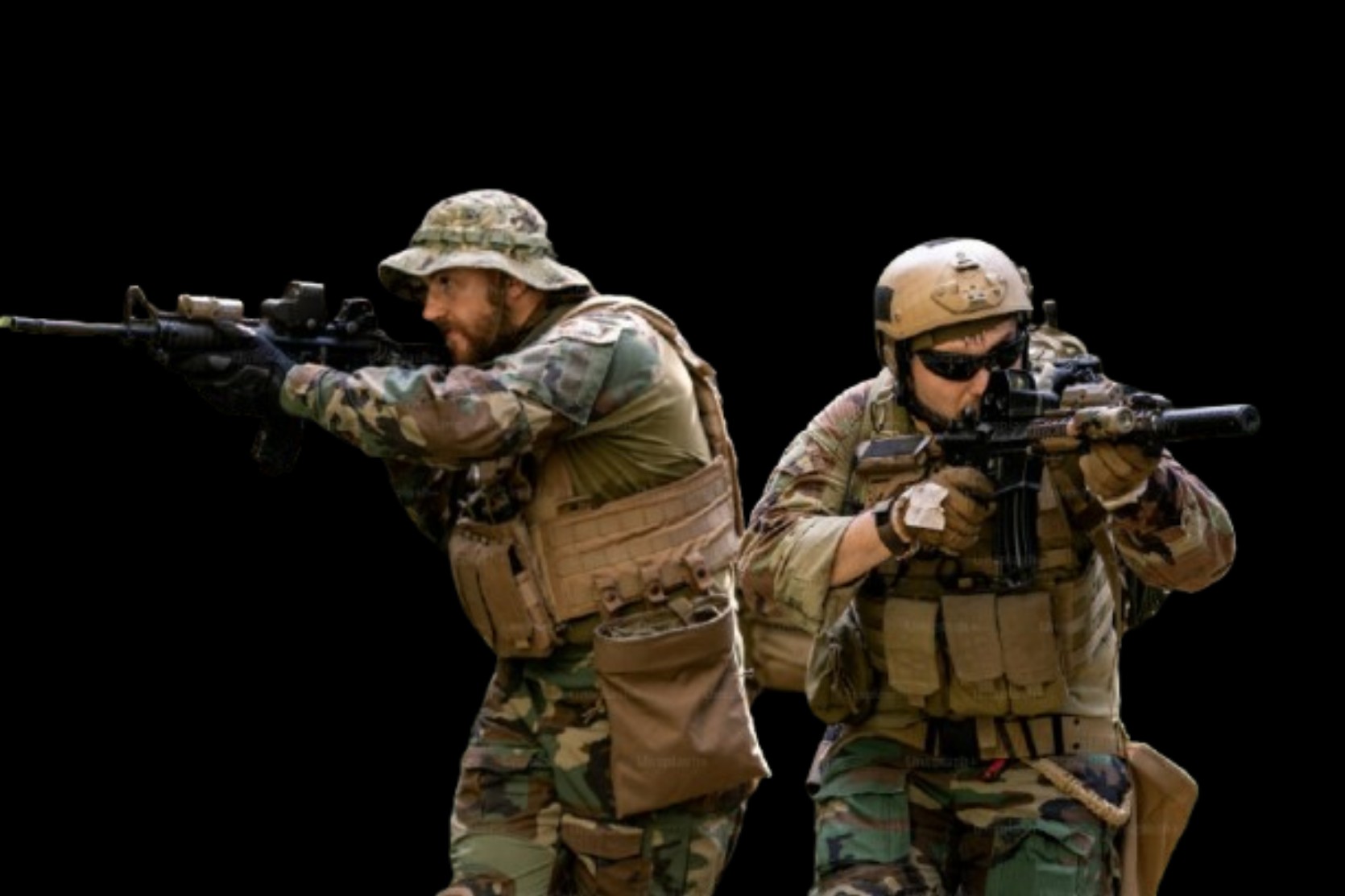
The Russian invasion of Ukraine has exposed something — an unseen secret about modern warfare: the most powerful armies in the world are running out of ammunition. Not because they misuse ammunition, but because the global economy was never designed to sustain this kind of conflict.

This is the hidden constraint of 21st century warfare. Weapons have become so technologically sophisticated that they are extraordinarily difficult to replace. A Challenger 2Challenger 2Britain's main battle tank — one of the most heavily protected in the world. tank is not a piece of industrial machinery that can be stamped out of metal sheets on a production line. It is a tool of precision that requires rounds made from depleted uranium, thermal imaging, composite reactive armour, and networks of supply chains that span across dozens of specialist manufacturers.

The same complexity is found in air and at sea. Modern missile systems used by both navies and air forces can strike targets hundreds of kilometres away with pinpoint accuracy, but each launch costs tens of thousands of pounds and takes months to replace. Furthermore, sustained use of them requires years of massive stockpiles — for instance, Iran has been saving for up to 20. Each launch represents a significant financial decision, not just a military one.

This is where economics enters the warzone. The side that wins a modern conflict is not the side with the best weapons — it's the side with the deepest industrial capacity to sustain them. This is, fundamentally, an economic issue.

£0k+

The cost of a single missile launch — a financial decision as much as a military one.

Per unit cost estimate

Ukraine — 2024

02

02Industrial Capacity

The Limits of Industrial Capacity

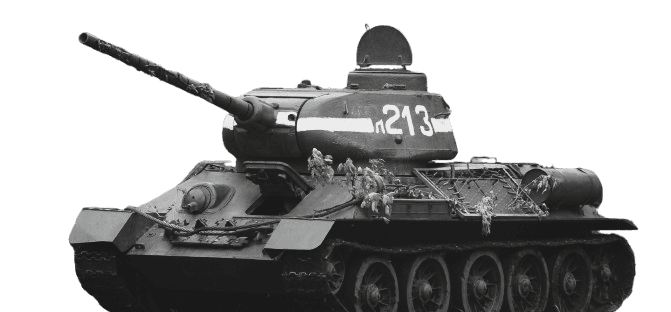
During World War II, this wasn't a problem. Soviet factories were quite literally relocated far away and converted to tank production overnight, chucking out T-34sT-34sSoviet medium tank, produced in enormous quantities during WWII. Roughly 84,000 were built — more than any other tank in history. A symbol of industrial-scale warfare. faster than they could be destroyed. Today, that elastic industry is gone. Modern specialised robotics and complex logistics have an increasingly inelastic PESinelastic PESPrice Elasticity of Supply — a measure of how quickly production can respond to demand. Specialised weapons components score very low: they cannot be scaled up and switched on in a matter of moments when a crisis begins. — they cannot be scaled up and switched on in a matter of moments when a crisis begins.

Drones are the first real answer to this constraint. Cheap, easy to produce, and lethal — they offer commanders strategic effectiveness without the financial burden of a manned aircraft or missile, especially when recruitment for the armed forces is becoming more scarce by the day. In that sense, the rise of the drone is not just a military idea, but an economic one.

The T-34 was produced faster than it could be destroyed. That elastic industrial capacity is gone forever.

WWII vs. modern supply chains

But industrial capacity is only the first half of the story. Because in the 21st century, you don't need to outproduce your enemy. You just need to outspend them — or even better yet: make sure they can't spend at all.

II
Part II

The battlefield has moved

From

ARMOURY

to

BALANCE
SHEET.

03

03The New Battlefield

The New Battlefield

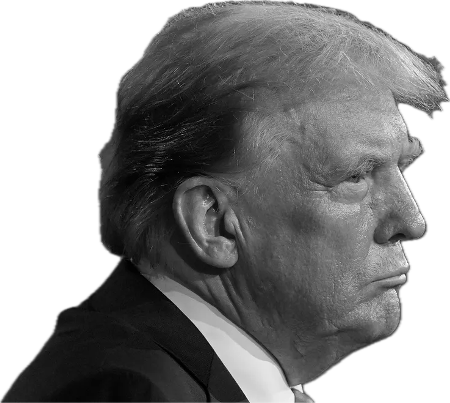
As world economies develop, we see not only how economic powerhouses like the USA can manufacture weapons, but also how they can use their economic strength to coerce other countries without firing a shot. Since Donald Trump took office for the second time in 2025, he has proceeded to impose heavy tariffs on many countries, most heavily on China at 145%. His aim was to reduce the US-China trade deficittrade deficitWhen a country imports more than it exports. The US ran a persistent trade deficit with China, importing far more Chinese goods than it sold in return — a key grievance behind Trump's tariff policy., and strategically decouple the American economy from Chinese manufacturers.

On paper, Trump's strategy initially worked. US imports from China fell sharply by 28% — the decoupling was happening. But soon, China simply redirected its exports to alternative markets in Vietnam, Mexico, Southeast Asia, and Europe, flooding them with cheaper goods.

The result was the opposite of what Trump intended: China ended 2025 with a trillion-dollar trade surplus — the largest ever recorded — while America's reputation as a partner became chaotic and unpredictable in the views of its allies. Furthermore, US manufacturing did not elevate, as goods were just sourced out from nearby countries instead.

0%

US imports from China fell sharply — but China simply redirected exports elsewhere.

Trade data, 2025

Donald Trump

US

United States

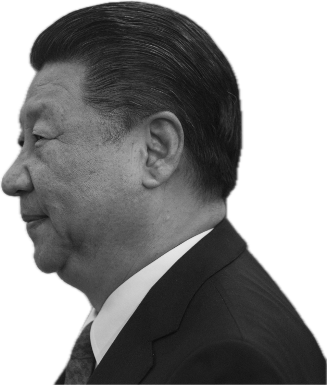
Xi Jinping

China

China

China won.

A trillion-dollar surplus — the largest ever recorded.

Redirected.

When US imports from China dropped 28%, Beijing simply flooded Vietnam, Mexico, and Europe with cheaper goods instead. The decoupling never happened.

Retaliated.

125% tariffs on American goods — and a stranglehold on rare earth minerals that threw the US automobile industry into total disarray.

Endured.

China had the economic fortitude to absorb the pressure. The US did not gain new manufacturing — it just sourced the same goods from nearby countries.

The Trade War in Numbers

US

United States

0%
Tariffs on Chinese goods
Peak rate · May 2025
0%
Drop in imports from China
After tariffs imposed
VS
China

China

0%
Retaliatory tariffs on US goods
Beijing's counter-strike
0%
of global rare earth refining
China's strategic chokehold
04

04The Retaliation

The Retaliation

China, the sleeping giant it was, would not sit idle — and the retaliation was fierce. In a harsh countermove, Beijing imposed 125% retaliatory tariffs on American goods, with the real uppercut being a restriction on the exports of rare earth mineralsrare earth mineralsA group of 17 metallic elements critical to semiconductors, electric vehicles, and defence technology. China controls 90% of global refining capacity — giving it enormous strategic leverage over any nation that depends on modern technology.. These materials, of which China controls 90% of our global refining capacity, are essential for producing semiconductors, electric vehicles, and defence technology. The US automobile industry was thrown into total disarray on two occasions as manufacturers found themselves unable to source components elsewhere.

Trump's era of gunboat capitalismgunboat capitalismUsing economic coercion — tariffs, sanctions, trade restrictions — as a tool of foreign policy. The modern equivalent of 19th-century gunboat diplomacy, where military force was used to open markets. is restricting trade — the fundamental principle of western economic theory. Trump has the potential to do catastrophic damage to both the world economy and his own, but with the supreme court ruling his tariffs illegal, will Trump back off? Or will he continue to disregard others and push on with his theory, wreaking more havoc?

0%

China's retaliatory tariffs on American goods — the opening salvo of economic warfare.

Beijing trade policy, 2025

Data Visualisation

The Tariff Escalation

US–China tariff rates · 2025

United States on China
China on United States
19%
Pre-2025Baseline
19%
34%
Jan 2025Initial round
34%
84%
Mar 2025Escalation
84%
125%
Apr 2025Retaliation phase
125%
145%
May 2025Peak tariff
125%

Source: Office of the United States Trade Representative · Tariff rates as reported, 2025

05 — The Collateral

"They were collateral in a war they never chose to enter."

Most countries lack the economic fortitude of China and the US. Smaller, more trade-dependent economies — particularly in south-east Asia and the Global South — found themselves caught in the crossfire. Local manufacturers have been unable to compete with cheap Chinese goods flooding their markets, all while simultaneously dodging US tariff threats of their own.

Unlike China, they had no trillion-dollar surplus to cushion the blow, no rare earth minerals to weaponise in retaliation, and no diplomatic leverage to find alternative solutions.

Vietnam

Vietnam

Export orders from US factories, Q2 2025

–12%

Bangladesh

Bangladesh

Garment sector revenue as China undercut prices

–18%

Malaysia

Malaysia

Tariff imposed by US on all Malaysian goods

10%

Sri Lanka

Sri Lanka

US tariff rate — among the highest in South Asia

44%

They were collateral in a war they never chose to enter — caught between two economic superpowers playing chess.

Key Takeaways

01

Modern weapons are too complex and expensive to replace at the speed of war — the global economy was never built for sustained conflict.

02

Drones are the first real economic answer to industrial warfare: cheap, scalable, and lethal without the supply chain burden of missiles or tanks.

03

The US-China tariff war proved that economic power is now the defining weapon — capable of more damage than military force, without a single troop deployed.

BtL

Conclusion

No matter what the answer to that question is, it is proven that a leader of a powerful economy can inflict more damage than ever before without a single troop being deployed, a single bullet being fired, or a single missile being launched.

The most effective weapon for our future world leaders will not be found in an armoury.
It will be found in a balance sheet.

As we enter a new era of warfare — relying less on bullets and bombs and more on the strength of global economies playing chess — we will see how the world develops, and who will emerge with an advantage for the next conflict.

About the Publication

Between
the Lines

A student social sciences publication from Sir John Lawes School, Harpenden. We are sixth-form students writing about politics, economics, and sociology — going deeper than the surface of current events, into the structural forces that actually shape the world.

Coming next

Vol. II

September 2026

The Team

EditorKira C.
Andrew H. — Writer
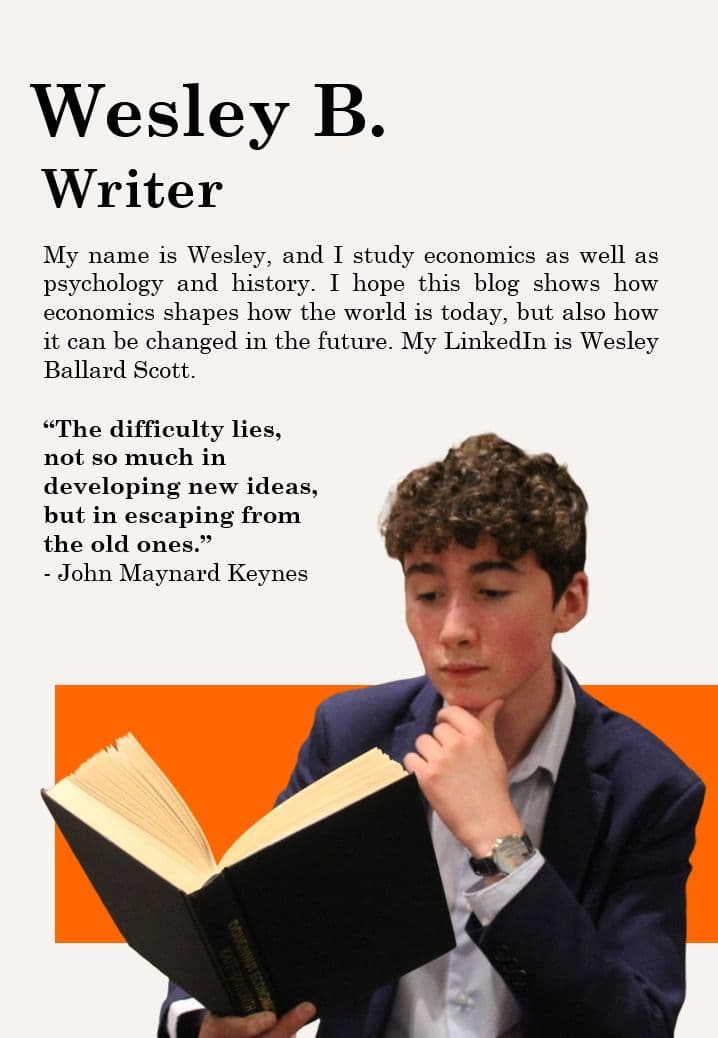
Wesley B. — Writer